


by Lisa Holder, MBA, Executive Coach & Strategic Advisor
At a top design firm under pressure to deliver, one team’s real challenge wasn’t the deadline—it was each other. Caught in a cycle of blame, burnout, and rescuing, their breakthrough came not from working harder, but from seeing their roles in the Drama Triangle—and learning how to step out of it.
Custom Designs is a home design firm serving the Orange County and Los Angeles County markets in California. Known for its beautiful designs and exceptional client service, the company takes pride in effectively meeting the demands of a high-end clientele that expects nothing short of excellence. The company atmosphere is hectic, with multiple projects underway at any given time. One of the project design teams is currently facing a critical deadline that could significantly impact their reputation with a valued client, Newport Beach Developers.
This project team consists of three professionals: Sally, the driven project manager; Jonathan, the cautious analyst; and Mary, the seasoned designer. Each team member offers a unique perspective. However, as the deadline nears, the pressure starts to reveal underlying tensions in their working relationships.
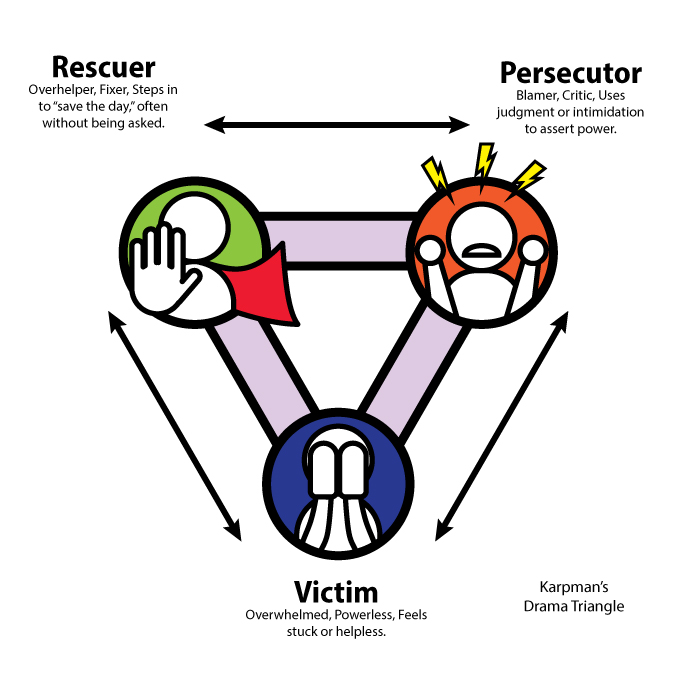
Sally is committed to advancing the project. However, when Jonathon misses his deadlines, she gets frustrated and speaks critically. Jonathon feels overwhelmed by pressure. He starts to see himself as a victim of his situation, dealing with stress and anxiety from an increasing workload. Feeling overwhelmed, he struggles with feelings of inadequacy.
Meanwhile, Mary finds herself stepping into the role of the rescuer. With her extensive design experience, she feels responsible for helping Jonathon lighten some of his workload. She begins taking over tasks that Jonathon struggles with, convinced that she is saving him from failure.
As the project advances, the Drama Triangle—highlighting the roles of victim, rescuer, and persecutor—becomes clear in the team dynamics. During a particularly charged team meeting, Jonathon finally loses his temper. Caught off guard, Sally responds defensively. Their exchanges grew more heated, with each feeling misunderstood and resentful. Mary, sensing the rising conflict, tries to mediate, but her attempt at resolution sounds accusatory to Jonathon, who feels cornered by his peers.
What follows is a series of back-and-forth responses, leading to a toxic cycle of blame and resentment. Each team member feels justified in their emotions but unable to break the cycle. The deadlines weigh heavily on their minds, but it quickly becomes clear that the real challenge isn’t the workload but their shared struggle with interpersonal Drama Triangle dynamics.
Recognizing the declining morale and increasing team tension, senior leadership at Custom Designs decides to engage The LDI Group, a leadership and organizational development firm based in Redlands, California, to facilitate a training session focused on conflict resolution and team dynamics. This intervention is not only about addressing the immediate concerns related to this project but also about equipping other project teams with valuable skills for future collaborations.
During the training session, project teams role-play the Drama Triangle: the victim, the rescuer, and the persecutor. This is pivotal for Sally, Jonathon, and Mary as they begin to reflect on their interactions and the impact of their behaviors on one another. Through role-play and group discussions, they realize how their patterns of communication have contributed to the ongoing tension.
Sally realizes that her leadership style has unintentionally shifted toward criticism instead of encouragement. In her haste to keep the project on track, she realizes that her words have often sounded harsh and discouraging to Jonathan. Instead of motivating him to improve, her comments have reinforced his feelings of inadequacy. Realization hurts, but it also presents an opportunity for growth, demonstrating the team’s commitment to learning and improvement.
Jonathon begins to see how his negative attitude has kept him in the role of a victim. He starts to share his struggles without blaming others. He explains the challenges he’s been facing, helping his teammates understand the reasons behind his frustrations. This honesty fosters empathy and encourages Mary to offer support collaboratively rather than trying to control.
Mary also changes perspective as she realizes that her desire to help isn’t always beneficial. While her intentions are noble, her tendency to jump in and take control of tasks has hindered Jonathon’s growth and fostered his victim mentality. She learns that offering help should involve active listening and understanding when assistance is genuinely needed, instead of assuming that her way is the best way to solve a problem.
With a new understanding of the Drama Triangle and each member’s role within it, the team began to have honest conversations about their experiences and feelings. They practice active listening, allowing each person to speak uninterrupted. Sally starts to promote a more open dialogue about tasks and expectations, encouraging team members to express concerns and share their workloads honestly.
Ultimately, Custom Designs not only meets the project deadline but also delivers an outstanding result that surpasses the expectations of Newport Beach Developers. Transformation within the project team serves as a positive example of how addressing team dynamics can boost performance and improve workplace satisfaction. The lessons learned during the training have a lasting influence, extending well beyond this single project and establishing a solid foundation for ongoing growth and collaboration for all Custom Design project teams.
Making the Change…
Are you inspired by Custom Design’s transformation from low morale, ineffective communication, and lack of productivity to high-performance and workplace satisfaction? Do you see a reflection of your own business journey in their story?
Take the First Step:
Just like Custom Designs, you can bring productivity and efficiency to your business. The journey begins with choosing an expert facilitator who understands your unique needs and goals.
Why Choose The LDI Group?
- Tailored Facilitation: Our Coaches and Facilitators integrate your unique business context into every session, ensuring solutions that are practical and relevant.
- Industry Insight: Our broad industry expertise ensures you’re matched with a facilitator who brings relevant experience and speaks the language of your business.
- Dynamic Tools and Methods: We apply forward-thinking tools and flexible approaches that align with the pace and complexity of your organization.
Your Success, Our Commitment
- Enhanced Team Collaboration: Build a culture of alignment, accountability, and shared purpose.
- Sustainable Growth: Establish a strong foundation for ongoing development and long-term results.
For more information, reach out to:
Don Mitchell dmitchell@theldigroup.com or growth@theldigroup.com
Visit: www.theldigroup.com
Direct 951.756.3479 or 888.480.7534